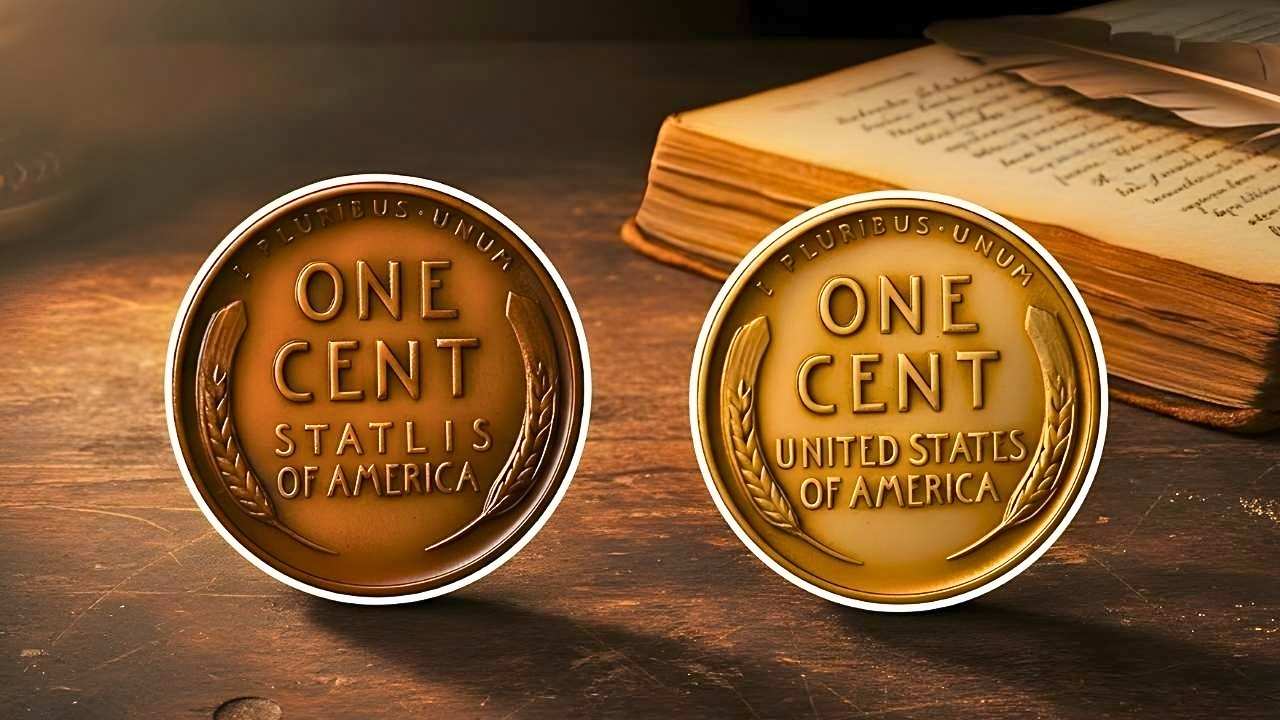
U.S. Pennies may seem like the smallest denomination in American currency, but certain rare varieties have shocked collectors with values exceeding $50,000. These coins, often overlooked in circulation, carry stories of minting errors, historical transitions, and limited production runs. In 2026, rare U.S. pennies continue to attract strong demand, with auctions setting record prices and collectors searching tirelessly for hidden copper treasures.
Origins of the U.S. Penny
The U.S. penny was first introduced in 1793, featuring a flowing hair design. Over the centuries, the penny has undergone numerous changes in design, composition, and minting techniques. From large copper cents to modern Lincoln cents, each era has produced rarities that now command extraordinary values. Collectors prize these coins not only for their monetary worth but also for their historical significance.
Composition and Design
- Early pennies: Pure copper until 1857
- Lincoln cents: Introduced in 1909, featuring Abraham Lincoln’s portrait
- Wartime issues: Steel cents in 1943 due to copper shortages
- Modern issues: Primarily copper‑plated zinc since 1982
- Mint marks: Philadelphia (no mint mark), Denver (D), San Francisco (S)
Chart of 10 Rare Pennies Worth Over $50,000
| Variety | Notable Feature | Estimated Value (2026) |
|---|---|---|
| 1943 Copper Penny | Wrong planchet error | $100,000–$500,000 |
| 1944 Steel Penny | Wartime rarity | $75,000–$200,000 |
| 1909-S VDB Lincoln Cent | Key date issue | $50,000–$100,000 |
| 1877 Indian Head Cent | Scarce mintage | $60,000–$120,000 |
| 1856 Flying Eagle Cent | Pattern coin | $75,000–$150,000 |
| 1922 No D Lincoln Cent | Missing mint mark | $50,000–$90,000 |
| 1955 Doubled Die Lincoln Cent | Famous error | $60,000–$125,000 |
| 1864 L on Ribbon Indian Head Cent | Distinct variety | $50,000–$80,000 |
| 1873 Doubled Liberty Indian Head Cent | Rare variety | $55,000–$95,000 |
| 1914-D Lincoln Cent | Scarce Denver issue | $50,000–$85,000 |
The Legendary 1943 Copper Penny
During World War II, pennies were struck in steel to conserve copper for the war effort. A few 1943 pennies were mistakenly struck on copper planchets, creating one of the most famous U.S. coin errors. These coins have sold for hundreds of thousands of dollars, making them legendary among collectors.
The 1944 Steel Penny
In 1944, the Mint returned to copper planchets, but a few steel planchets were accidentally used. These coins are extremely rare and highly valuable, with auction prices reaching well over $100,000.
The 1909-S VDB Lincoln Cent
The first year of the Lincoln cent featured designer Victor David Brenner’s initials, VDB, on the reverse. The San Francisco Mint produced a limited number of these coins, making them one of the most sought‑after key dates in the series.
The 1877 Indian Head Cent
The 1877 Indian Head Cent is considered the key date of the series due to its low mintage. Collectors prize this coin for its scarcity, with values exceeding $60,000 in high grades.
The 1856 Flying Eagle Cent
The Flying Eagle Cent was America’s first small cent. The 1856 issue was struck as a pattern coin, with limited numbers distributed to Congress and collectors. Today, it is one of the most valuable early U.S. cents.
The 1922 No D Lincoln Cent
In 1922, all Lincoln cents were struck at the Denver Mint. A small number were produced without the “D” mint mark, creating a rare variety that collectors eagerly seek.
The 1955 Doubled Die Lincoln Cent
One of the most famous error coins, the 1955 Doubled Die Cent features dramatic doubling on the obverse lettering. This coin is instantly recognizable and commands strong premiums at auction.
The 1864 L on Ribbon Indian Head Cent
This variety features a small “L” on the ribbon of Liberty’s headdress, distinguishing it from other issues. Its rarity makes it highly collectible and valuable.
The 1873 Doubled Liberty Indian Head Cent
The 1873 Doubled Liberty Cent is a rare variety with noticeable doubling on the word “Liberty.” Collectors prize it for its uniqueness and scarcity.
The 1914-D Lincoln Cent
The 1914-D Lincoln Cent is one of the most important key dates in the series. Its low mintage and scarcity in high grades make it a cornerstone of any Lincoln cent collection.
Market Trends in 2026
The rare penny market remains strong in 2026, with collectors drawn to key dates and famous error coins. Auction houses report record prices for copper and steel wartime issues, while online platforms have expanded access to trading. Certified coins in high grades continue to attract strong demand, and varieties are increasingly popular among advanced collectors.
Collecting Tips for Enthusiasts
- Learn to recognize famous errors such as the 1943 Copper Penny and 1955 Doubled Die Cent
- Preserve coins in protective holders to prevent wear
- Verify authenticity through professional grading services
- Focus on condition, as higher grades significantly increase value
- Stay informed about auction results and market trends
Historical Significance
Pennies are more than just currency; they are a reflection of America’s history, artistry, and resilience. From wartime shortages to design innovations, each rare penny tells a story of its era. Collectors value not only the coin’s metal but also the history it represents.
Key Highlights
- Rare pennies can be worth over $50,000, with some exceeding $500,000
- Famous rarities include the 1943 Copper Penny, 1944 Steel Penny, and 1909-S VDB Lincoln Cent
- Indian Head and Flying Eagle cents also contain valuable key dates
- Collector demand remains strong in 2026, with auctions setting record prices
- Condition and authenticity are crucial for determining value
Final Words
The U.S. penny, often overlooked in daily transactions, holds some of the greatest treasures in American numismatics. In 2026, collectors continue to seek out rare varieties worth tens of thousands of dollars. Whether searching for a 1943 Copper Penny or building a complete Lincoln cent set, the pursuit of rare pennies offers a journey through history and the chance to hold one of the most valuable pieces of America’s coinage legacy.