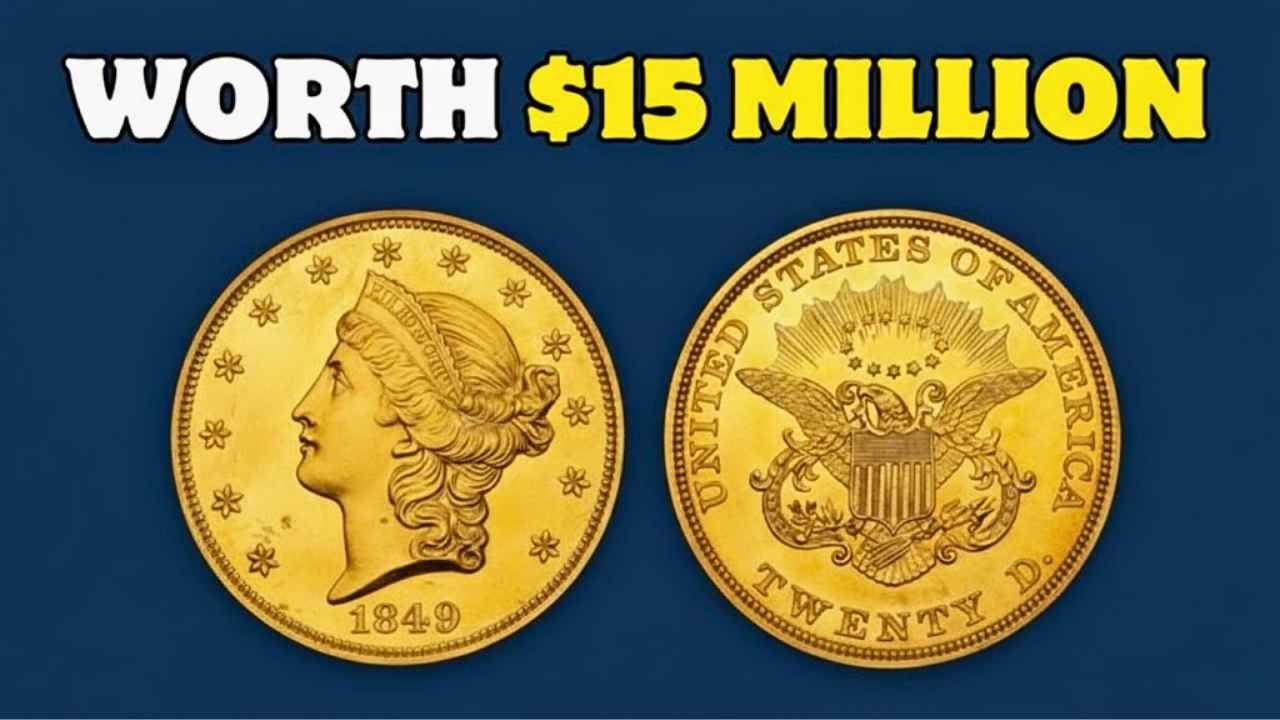
The mid‑19th century was a time of extraordinary change in the United States. The discovery of gold in California in 1848 triggered the famous Gold Rush, drawing thousands of fortune seekers westward. With so much gold entering the economy, the U.S. Mint needed a new coin that could represent larger sums of money. Thus, in 1849, the Liberty Head Double Eagle was born.
This coin carried a face value of twenty dollars, a significant amount in its day. It was designed by Chief Engraver James B. Longacre, whose artistry gave the coin its iconic Liberty portrait on the obverse and a majestic eagle on the reverse. The Double Eagle quickly became a symbol of America’s expanding wealth and ambition.
Why the 1849 Liberty Head Double Eagle Is Unique
While millions of Double Eagles were minted in the decades that followed, the 1849 issue stands apart. Only a handful of trial pieces were struck that year, making them among the rarest coins in American history. In fact, just one example is known to exist in private hands, while another resides in the Smithsonian Institution.
This rarity alone elevates the coin to legendary status. Collectors and historians alike view it not merely as currency but as a tangible artifact of the Gold Rush era. Its scarcity, combined with its historical significance, explains why it has been valued at an astonishing fifteen million dollars.
A Symbol of the Gold Rush Era
The Gold Rush was more than a scramble for riches; it reshaped the nation. California’s population exploded, new towns sprang up, and the economy shifted dramatically. The Liberty Head Double Eagle embodies this transformation. It was minted at a time when gold was flowing into the Treasury, and the coin itself became a practical way to store and transport wealth.
Owning an 1849 Double Eagle is like holding a piece of that history. It represents the hopes, struggles, and triumphs of those who ventured west in search of opportunity.
The Artistic Design
James B. Longacre’s design deserves special mention. The obverse features Lady Liberty wearing a coronet inscribed with the word “Liberty.” Her profile is elegant and timeless, reflecting the ideals of freedom and prosperity. The reverse showcases a heraldic eagle clutching arrows and an olive branch, symbolizing both strength and peace.
This design remained in use for decades, becoming one of the most recognizable motifs in American numismatics. The artistry of the coin adds to its allure, making it not just a financial relic but a work of art.
The Journey of the Coin
The surviving 1849 Double Eagle in private hands has a fascinating journey. Passed through generations of collectors, it has been carefully preserved and admired. Each time it changes ownership, it captures headlines in the numismatic world. Its value has steadily risen, reflecting both its rarity and the growing appreciation for historical coins.
Unlike other collectibles, this coin is not simply about aesthetics or age. It is about the story it tells—the dawn of the Gold Rush, the expansion of the American frontier, and the evolution of the nation’s currency.
Why It Is Called the King of Coins
In numismatic circles, the 1849 Liberty Head Double Eagle is often referred to as the “King of Coins.” This title is not given lightly. It is reserved for pieces that combine rarity, historical importance, and unmatched desirability.
Other coins may be rare, but few carry the weight of history that this Double Eagle does. It is a coin that bridges the gap between economics and culture, between art and utility. Its fifteen‑million‑dollar valuation is not just about gold content; it is about the narrative it embodies.
The Legacy of the Double Eagle
The Liberty Head Double Eagle continued to be minted until 1907, when it was replaced by the Saint‑Gaudens Double Eagle, another masterpiece of American coinage. Yet the 1849 issue remains the cornerstone of the series.
Collectors today still chase Double Eagles from later years, but none can match the mystique of the first. The coin’s legacy endures as a reminder of how money can reflect the spirit of its time.

Key Highlights
- Introduced in 1849 during the California Gold Rush
- Designed by Chief Engraver James B. Longacre
- Only one privately owned specimen exists today
- Valued at approximately fifteen million dollars
- Known as the “King of Coins” for its rarity and historical significance
Final Words
The 1849 Liberty Head Double Eagle is more than a coin; it is a relic of America’s most transformative era. Its story intertwines with the Gold Rush, the expansion of the frontier, and the evolution of U.S. currency. With its rarity, artistry, and historical weight, it stands as the ultimate prize for collectors and historians alike.
To hold this coin is to hold a piece of the American dream—a dream forged in gold, ambition, and the enduring pursuit of prosperity.