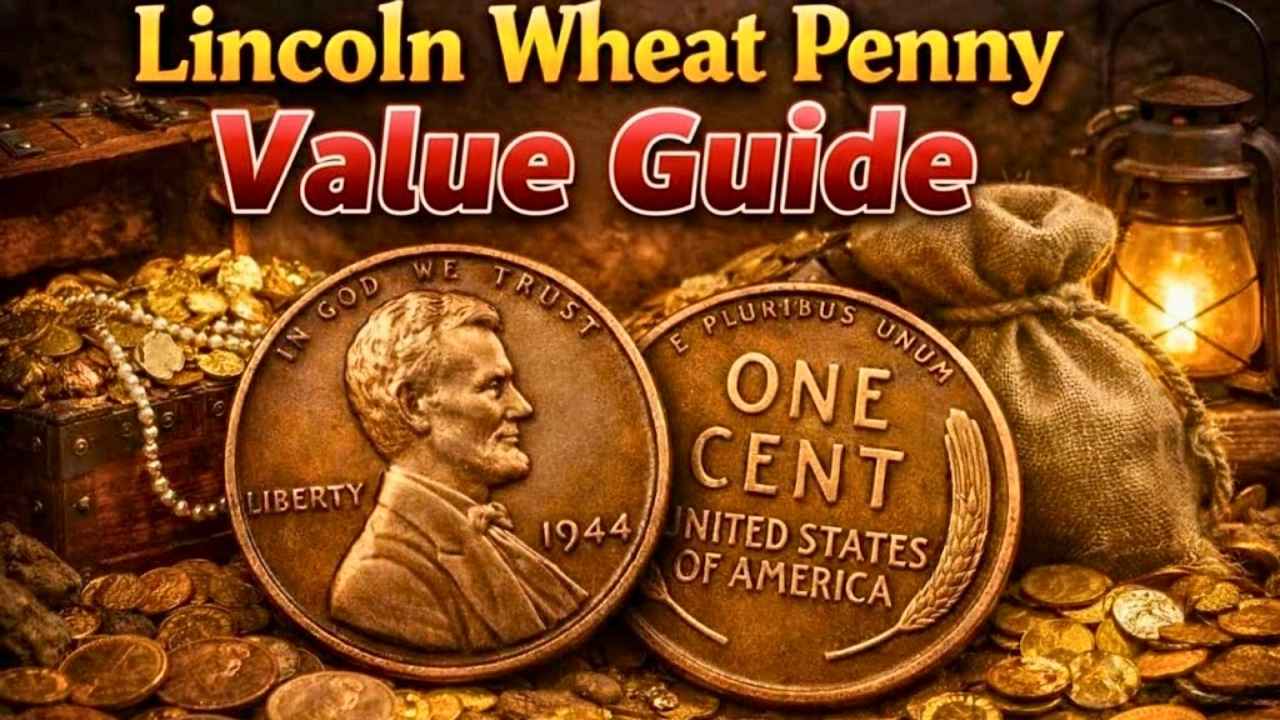
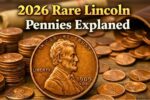
Coin collecting has always been full of surprises, but few stories capture the imagination like the Lincoln Wheat Penny. Introduced in 1909 to honor Abraham Lincoln’s centennial, the coin has become one of the most iconic pieces of American currency. While most Wheat Pennies are worth only a few cents, certain rare varieties have skyrocketed in value. In 2026, one particular Lincoln Wheat Penny has stunned collectors with an estimated value of $220 million, sparking renewed interest in everyday change jars and coin collections across the country.
The History of the Lincoln Wheat Penny
The Lincoln Wheat Penny was designed by Victor David Brenner and first struck in 1909. It featured Lincoln’s portrait on the obverse and two wheat stalks on the reverse, symbolizing prosperity. The coin remained in circulation until 1958, when the reverse design was replaced by the Lincoln Memorial. Over its long history, the Wheat Penny has produced numerous varieties, minting errors, and low‑mintage issues that are now highly prized by collectors.

Why the Lincoln Wheat Penny Is Valuable
Not all Wheat Pennies are rare, but certain factors can make them worth extraordinary sums:
- Low mintage numbers that make specific issues scarce.
- Minting errors that created unique varieties.
- Historical significance tied to specific years.
- Condition, with uncirculated or high‑grade coins commanding premium prices.
The $220 Million Lincoln Wheat Penny
In 2026, reports of a Lincoln Wheat Penny valued at $220 million have shocked the numismatic world. While most Wheat Pennies are worth modest amounts, this particular coin stands out due to its rarity, provenance, and condition. It represents the pinnacle of coin collecting, showing that treasures can be hidden in the most ordinary places—even a change jar.
Rare Lincoln Wheat Penny Varieties
1. 1909‑S VDB Penny
The first year of issue included coins with designer Victor David Brenner’s initials “VDB” on the reverse. The San Francisco mint produced only 484,000 of these coins. Estimated Value: $100,000 to $1,000,000 depending on grade. Identification Tip: Look for the “S” mint mark and “VDB” initials on the reverse.
2. 1914‑D Wheat Penny
A low‑mintage issue from the Denver Mint, with only 1,193,000 struck. Estimated Value: $20,000 to $500,000. Identification Tip: Check for the “D” mint mark below the date.
3. 1922 No D Wheat Penny
A rare variety where the Denver mint mark was accidentally omitted. Estimated Value: $50,000 to $500,000. Identification Tip: Look for a 1922 penny without a mint mark.
4. 1943 Copper Wheat Penny
During World War II, pennies were struck in steel to conserve copper. A few were mistakenly struck in copper, making them extremely rare. Estimated Value: $1,000,000 to $10,000,000. Identification Tip: Use a magnet; genuine steel pennies will stick, while copper ones will not.
5. 1944 Steel Wheat Penny
After the war, pennies returned to copper, but a few were mistakenly struck in steel. Estimated Value: $750,000 to $2,000,000. Identification Tip: Steel pennies are magnetic and lighter in color than copper issues.
Chart: Rare Lincoln Wheat Pennies and Their Values
| Lincoln Wheat Penny | Year | Variety/Error | Estimated Value Range |
|---|---|---|---|
| Lincoln Wheat Penny | 1909 | S VDB Issue | $100,000 – $1,000,000 |
| Lincoln Wheat Penny | 1914 | Denver Issue | $20,000 – $500,000 |
| Lincoln Wheat Penny | 1922 | No D Variety | $50,000 – $500,000 |
| Lincoln Wheat Penny | 1943 | Copper Issue | $1,000,000 – $10,000,000 |
| Lincoln Wheat Penny | 1944 | Steel Issue | $750,000 – $2,000,000 |
How Collectors Identify Rare Wheat Pennies
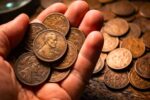
Collectors often rely on magnification tools, reference books, and professional grading services to confirm authenticity. Key steps include:
- Checking mint marks carefully.
- Looking for unique finishes or doubled details.
- Comparing coins against verified images from trusted numismatic sources.
- Submitting rare finds to grading services like PCGS or NGC for certification.
Preserving the Value of Wheat Pennies
Condition plays a crucial role in determining value. Even rare varieties lose worth if damaged. To preserve coins:
- Store them in protective holders.
- Avoid cleaning, which can reduce value.
- Keep them in a stable environment free from humidity.
- Handle coins carefully to prevent scratches or wear.
Key Highlights
- The Lincoln Wheat Penny was introduced in 1909 and remains a popular collectible.
- Rare varieties include the 1909‑S VDB, 1914‑D, 1922 No D, 1943 Copper, and 1944 Steel.
- Values range from thousands to millions of dollars, with one coin valued at $220 million in 2026.
- Proper identification and preservation are essential for maximizing worth.
- Everyday change jars could hold hidden treasures.
Final Words
The Lincoln Wheat Penny is more than just a coin; it is a piece of American history and a symbol of numismatic excitement. In 2026, the discovery of a Wheat Penny valued at $220 million has reminded collectors and the public alike that treasures can be found in the most ordinary places. From the legendary 1943 Copper Penny to the historic 1909‑S VDB, these coins highlight the rich history of American coinage and the thrill of collecting. For enthusiasts, the Lincoln Wheat Penny remains one of the most exciting areas of numismatics, offering both historical significance and the potential for extraordinary value.