The State Quarters Program, launched in 1999 and completed in 2008, remains one of the most popular coin series in U.S. history. With fifty unique designs representing each state, these coins captured the imagination of millions of Americans. While most state quarters are common and worth only face value, stories of rare examples selling for thousands or even millions have circulated widely. In 2026, collectors continue to debate the truth behind these claims, seeking clarity on which coins are genuinely valuable and which are simply myths.
The History of the State Quarters Program
The program was introduced by the U.S. Mint to celebrate each state’s heritage. Every year, five new designs were released, creating excitement among collectors and the general public. The initiative was a huge success, with millions of people saving quarters and building collections. By the end of the program in 2008, billions of coins had been minted, making most examples common. However, certain varieties and errors have become rare and valuable.
Why Some State Quarters Are Valuable
Value in state quarters comes from rarity, condition, and minting errors. Coins struck in low numbers, proof sets, or with unusual mistakes can command premiums. High-grade examples certified by professional grading services are also sought after. While most quarters are worth only twenty-five cents, rare varieties can be worth hundreds or even thousands. Claims of multi-million dollar values often exaggerate the truth, but genuine rarities do exist.
Common Myths About State Quarters
One of the most persistent myths is that ordinary state quarters are worth millions. In reality, most circulation strikes are extremely common. Another myth is that all silver proof quarters are rare; while they are more valuable than circulation strikes, they were produced in large numbers and are not worth millions. Misunderstandings often arise from online listings or sensational headlines, which can mislead casual collectors.
Rare State Quarter Varieties
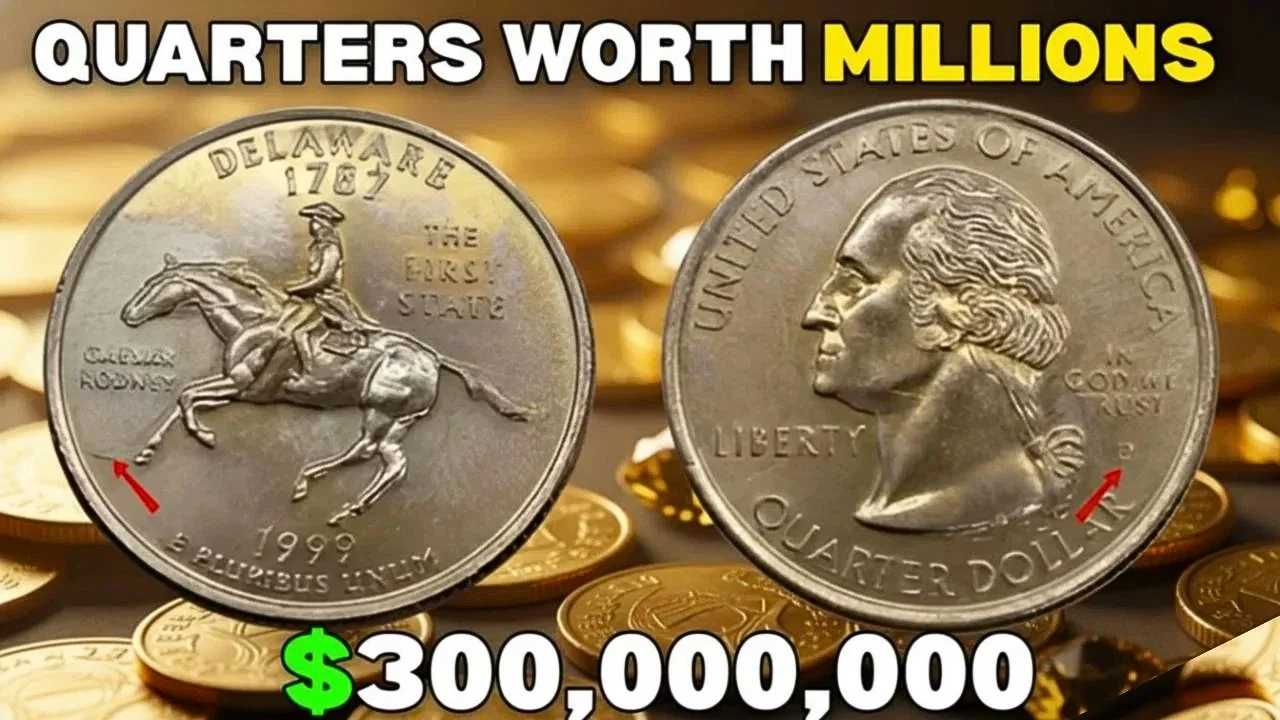
1999 Delaware Spitting Horse
This error shows a die crack on the horse’s mouth, creating the appearance of spitting. It is a popular variety among collectors.
2004 Wisconsin Extra Leaf
Some Wisconsin quarters show an extra leaf on the corn stalk, either high or low. These varieties are rare and valuable.

2005 Kansas In God We Rust
A weak strike caused some coins to appear with the motto “In God We Rust.” This error is unusual and collectible.
Proof and Silver Sets
Special collector versions struck in proof and silver are more valuable than circulation strikes, especially in high grades.
High-Grade Circulation Coins
Even common state quarters can be valuable if preserved in pristine, uncirculated condition.
Chart: Rare State Quarter Values in 2026
| Variety | Condition | Estimated Value (USD) |
|---|---|---|
| 1999 Delaware Spitting Horse | MS-65 | $50 – $200 |
| 2004 Wisconsin Extra Leaf (High/Low) | MS-65 | $500 – $2,000 |
| 2005 Kansas In God We Rust | MS-65 | $100 – $500 |
| Silver Proof Sets | PR-69 | $20 – $100 |
| High-Grade Circulation Coins | MS-67+ | $25 – $75 |
The Truth Behind Multi-Million Dollar Claims
While rare state quarters can be valuable, claims of coins worth millions are misleading. No state quarter has ever sold for millions at auction. The highest prices are typically in the thousands, reserved for rare varieties in exceptional condition. Sensational headlines often exaggerate values to attract attention, but serious collectors know that rarity and condition are the true drivers of value.
Collecting Trends in 2026
In 2026, state quarters remain popular among collectors. Auction houses report steady demand for rare varieties, while online marketplaces make it easier for enthusiasts to buy and sell. Social media has fueled interest among younger collectors, who enjoy sharing discoveries and learning about numismatics. The combination of nostalgia, artistry, and investment potential ensures that state quarters continue to attract attention.
Tips for Collectors
- Study reference guides to learn about rare varieties and minting errors
- Examine coins carefully for unusual features and sharp details
- Consider professional grading for high-value specimens
- Store coins properly to prevent tarnish and damage
- Be cautious of exaggerated claims and verify values with trusted sources
Key Highlights
- The State Quarters Program ran from 1999 to 2008 and remains highly popular
- Rare varieties include the Delaware Spitting Horse, Wisconsin Extra Leaf, and Kansas In God We Rust
- Values in 2026 range from $20 for silver proofs to $2,000 for rare errors in high grades
- Claims of multi-million dollar values are myths and exaggerations
- Condition and rarity are the most important factors in determining value
Final Words
The State Quarters Program proves that modern coinage can be both educational and collectible. While most examples are common, rare varieties and errors continue to inspire fascination among collectors. In 2026, the hunt for valuable state quarters remains as exciting as ever, offering both historical insight and the possibility of hidden treasure. Whether you are a seasoned numismatist or a curious beginner, exploring the State Quarters series is a rewarding journey through American history and coinage.