The world of coin collecting is full of surprises. While most coins are worth only their face value, certain rare editions and error varieties have shocked collectors with values reaching into the millions. In 2026, three iconic U.S. coins—the Kennedy Half Dollar, the Sacagawea Dollar, and the Susan B. Anthony Dollar—continue to capture the imagination of numismatists. Each coin carries a unique history, and rare examples have achieved legendary status with values that defy expectations.
The Kennedy Half Dollar
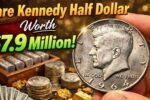
First minted in 1964, the Kennedy Half Dollar was introduced as a tribute to President John F. Kennedy following his assassination. Designed by Gilroy Roberts and Frank Gasparro, the coin features Kennedy’s portrait on the obverse and the presidential seal on the reverse. The first issues were struck in 90 percent silver, making them highly desirable. Later issues transitioned to 40 percent silver and eventually copper‑nickel clad compositions.
Rare varieties such as the 1964 Special Mint Set coins, the 1970‑D issue, and the 1998 matte proof have become highly collectible. Errors including doubled dies, off‑center strikes, and wrong planchet coins add to the excitement. Stories of Kennedy Half Dollars valued at millions highlight the potential hidden in this iconic coin.
The Sacagawea Dollar
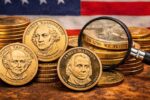
Introduced in 2000, the Sacagawea Dollar was designed to honor the Shoshone woman who guided Lewis and Clark during their expedition. Its golden color and smooth edge distinguished it from other denominations. The obverse features Sacagawea carrying her infant son, while the reverse originally depicted a soaring eagle. Later issues introduced rotating designs under the Native American $1 Coin Program.
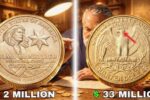
The most famous variety is the Cheerios dollar, distributed in cereal boxes as part of a promotion. These coins featured enhanced eagle feather details, making them distinct from standard issues. High‑grade examples have sold for tens of thousands, and one legendary Sacagawea dollar achieved a record sale of $2.1 million. Errors such as wrong planchet strikes and missing edge lettering add further value.
The Susan B. Anthony Dollar
The Susan B. Anthony Dollar was introduced in 1979 to honor the pioneering suffragist. Its small size and similarity to the quarter made it unpopular in circulation, but it remains significant in U.S. coinage history. The obverse features Anthony’s portrait, while the reverse depicts an eagle landing on the moon, symbolizing America’s achievements in space.
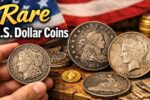
Rare varieties include proof issues and coins with minting errors. While most Susan B. Anthony dollars are worth only face value, certain rare examples have achieved surprising auction results. Collectors appreciate the coin for its historical significance and its role in representing women in U.S. coinage.
Why These Coins Are Valuable
Several factors contribute to the extraordinary value of these coins:
- Rarity: Low‑mintage issues and promotional editions are highly prized.
- Errors: Minting mistakes create unique varieties that attract collectors.
- Condition: Coins in mint state or proof condition command higher prices.
- Historical Appeal: Coins tied to significant events or figures carry added value.
When these factors align, coins can achieve values far beyond their face value.
Collector Insights
Collectors evaluating these coins often focus on:
- Mintmarks: Coins from certain mints are rarer than others.
- Provenance: Coins with documented ownership or auction history can command premiums.
- Authentication: Professional grading is essential for rare varieties.
- Market Trends: Auction records and collector demand influence values.
By paying attention to these details, collectors can identify valuable coins and avoid common pitfalls.
Value Guide for 2026
As of 2026, rare Kennedy Half Dollars, Sacagawea Dollars, and Susan B. Anthony Dollars continue to achieve strong auction results. Common circulation coins remain inexpensive, but rare editions and error coins can fetch significant sums. The Kennedy Half Dollar has produced examples valued at millions, the Sacagawea Dollar includes the legendary $2.1 million coin, and rare Susan B. Anthony issues have surprised collectors with high prices. Auction records show that demand for these coins remains vibrant, reflecting both their rarity and historical significance.

Tips for Collectors
For those interested in building a collection of these coins, here are some practical tips:
- Learn to recognize key varieties and promotional issues.
- Store coins in protective holders to prevent damage.
- Consider professional grading for high‑value coins.
- Stay informed by reading numismatic publications and attending auctions.
- Network with other collectors to share knowledge and opportunities.
By following these practices, collectors can build meaningful and potentially valuable collections.
Investment Potential
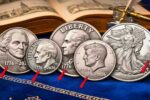
Rare U.S. coins are not only collectibles but also potential investments. Over time, coins with historical significance and rarity tend to appreciate in value. While coin collecting should be driven by passion, the financial aspect cannot be ignored. Investors often view rare coins as tangible assets that diversify portfolios. However, it is important to approach coin investing with knowledge and caution, avoiding speculative purchases without proper research.
Key Highlights
- The Kennedy Half Dollar was first minted in 1964 to honor President John F. Kennedy.
- The Sacagawea Dollar was introduced in 2000 and includes the famous Cheerios variety.
- The Susan B. Anthony Dollar was introduced in 1979 to honor the suffragist.
- Rare varieties and errors can elevate coin values dramatically.
- Some coins have achieved values in the millions, including a Sacagawea dollar sold for $2.1 million.
- Condition, rarity, and demand strongly influence coin prices.
- The market for these coins remains strong in 2026.
Final Words
The Kennedy Half Dollar, Sacagawea Dollar, and Susan B. Anthony Dollar represent more than just currency; they are symbols of history, culture, and progress. From honoring presidents and pioneers to celebrating Native American heritage and women’s rights, these coins capture the spirit of America. Rare dates, hidden errors, and promotional issues add excitement to collecting, offering the possibility of turning an ordinary coin into a fortune. Whether you are a seasoned numismatist or a beginner, these coins provide a rewarding journey into America’s past and a chance to hold history in your hands. In 2026, the message is clear: check your coins carefully, because some may be worth far more than you imagine.