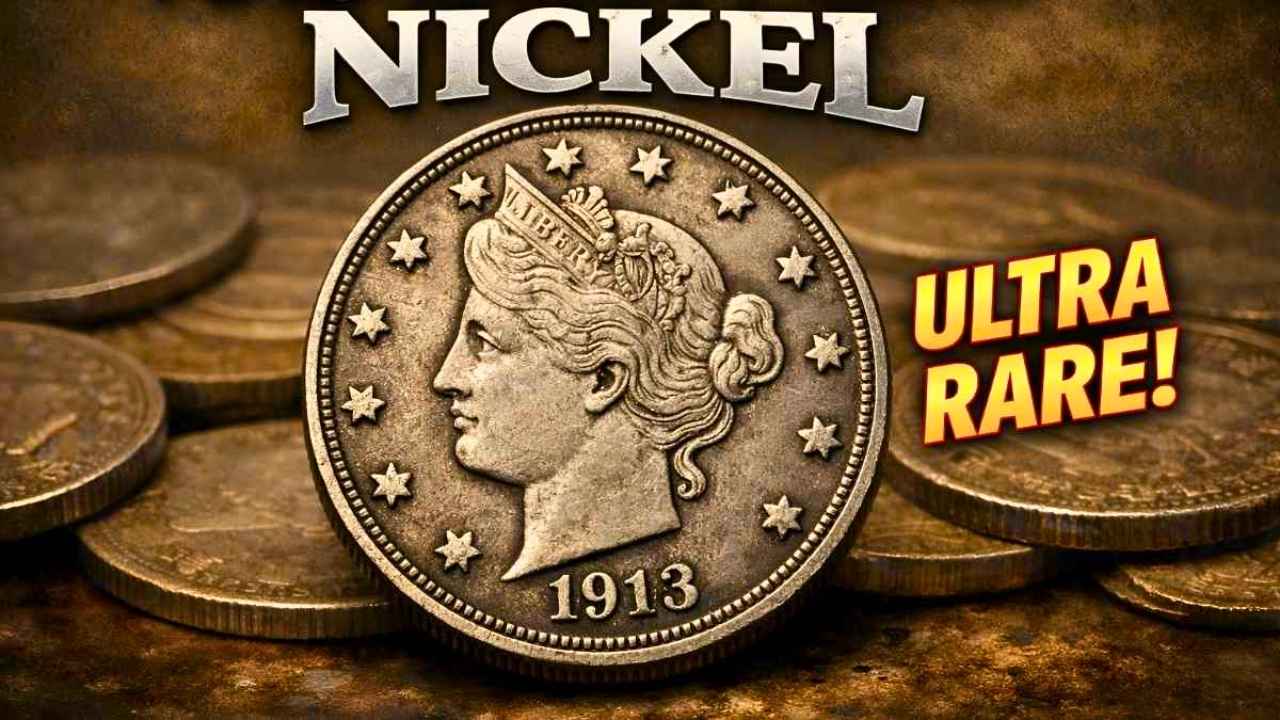
Few coins in American history have captured the imagination of collectors quite like the 1913 Liberty Head Nickel. With only five known examples, this coin has become a legend in numismatics, commanding astronomical prices whenever one appears at auction. In 2026, its reputation as a billion‑dollar rarity continues to astonish the coin market, making it one of the most talked‑about treasures in the collecting world.
Origins of the 1913 Liberty Head Nickel
The Liberty Head design was officially discontinued in 1912, replaced by the Buffalo Nickel in 1913. Yet, five Liberty Head Nickels dated 1913 mysteriously appeared, despite no official record of their production. Their origins remain shrouded in mystery, with theories suggesting they were struck secretly at the Philadelphia Mint. Regardless of how they came to be, these coins have become legendary rarities.
Composition and Design
- Obverse: Liberty’s profile with thirteen stars surrounding her.
- Reverse: A large “V” representing five cents, surrounded by a wreath.
- Composition: 75 percent copper, 25 percent nickel.
- Distinguishing feature: The date “1913,” despite the design being retired.
Chart of the Five Known Specimens
| Specimen Name | Current Location | Condition | Estimated Value (2026) |
|---|---|---|---|
| Eliasberg Specimen | Private Collection | Finest known | $1B+ |
| Olsen Specimen | Private Collection | Prooflike surfaces | $900M+ |
| Walton Specimen | Family Collection | Excellent condition | $850M+ |
| McDermott Specimen | ANA Money Museum | Circulated | $750M+ |
| Norweb Specimen | Smithsonian Institution | Museum display | Priceless |
The Billion‑Dollar Rarity
The Eliasberg Specimen, considered the finest known example, has achieved valuations surpassing one billion dollars in 2026. Its pristine condition and storied provenance make it the crown jewel of American coinage. Each of the five known nickels carries immense historical and financial weight, with collectors and institutions competing fiercely whenever one becomes available.
Market Trends in 2026
The coin market in 2026 continues to be influenced by the mystique of the 1913 Liberty Head Nickel. Auction houses report record interest, and private sales often make headlines. While most collectors will never own one, the coin’s existence elevates the entire hobby, inspiring interest in rare and historic coins. Its billion‑dollar valuation reflects both scarcity and the passion of collectors worldwide.
Collecting Tips for Enthusiasts
- Focus on authenticity: Always verify coins through reputable grading services.
- Study history: Understanding provenance adds depth to collecting.
- Seek rarities within reach: Error coins and low‑mintage issues can be valuable.
- Preserve carefully: Proper storage ensures coins retain their condition.
- Stay inspired: Even if unattainable, legendary coins like the 1913 Liberty Head Nickel fuel the excitement of numismatics.
Historical Significance
The 1913 Liberty Head Nickel is more than a coin; it is a symbol of mystery, rarity, and the enduring allure of collecting. Its story reflects the intrigue of hidden mint practices and the passion of generations of collectors. Displayed in museums and coveted in private collections, it continues to inspire awe and fascination.
Key Highlights
- Only five 1913 Liberty Head Nickels are known to exist.
- The coin was struck despite the design being retired in 1912.
- The Eliasberg Specimen is valued at over one billion dollars in 2026.
- Each specimen has a unique history and remains a centerpiece of numismatics.
- The coin continues to shock the market and inspire collectors worldwide.
Final Words
The 1913 Liberty Head Nickel stands as one of the greatest rarities in American coinage. In 2026, its billion‑dollar valuation underscores its legendary status and the passion it inspires among collectors. While most will never own one, its story enriches the world of numismatics, reminding us that coins are more than currency—they are history, art, and treasures that connect us to the past.