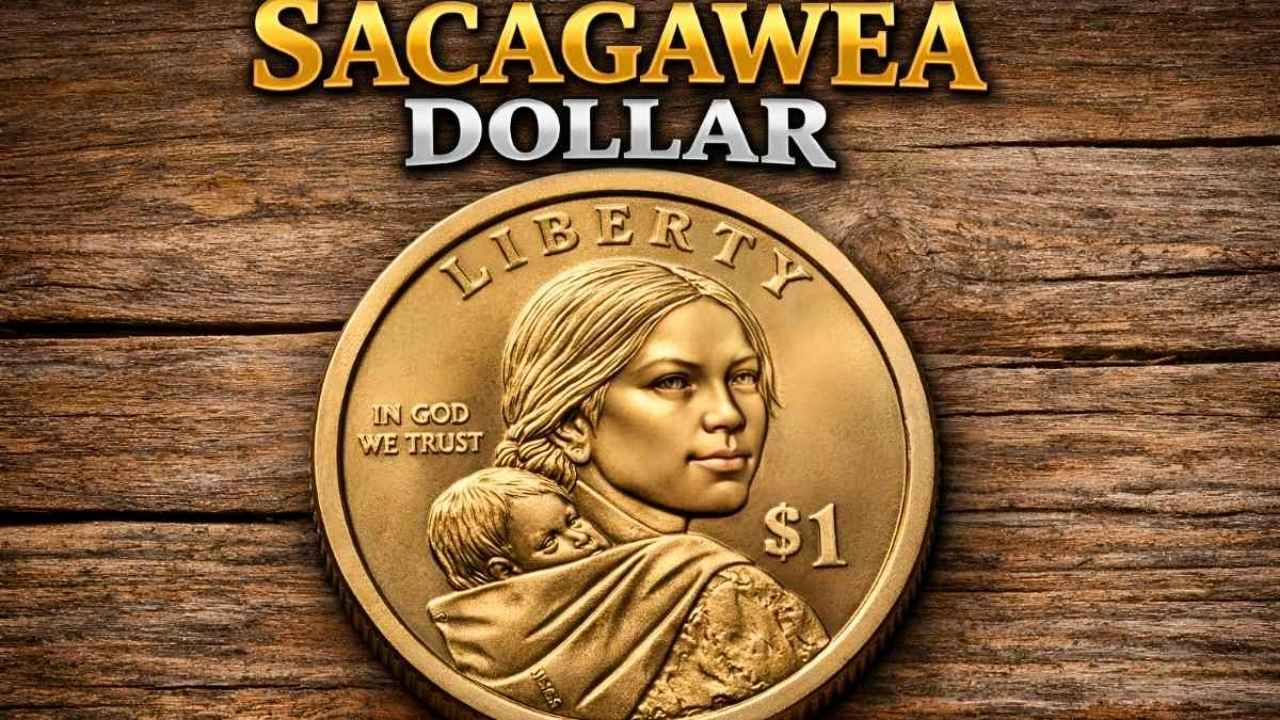
The Sacagawea Dollar, first introduced in 2000, was designed to honor the Shoshone woman who guided Lewis and Clark on their historic expedition. While most of these golden‑colored coins are common and circulate at face value, certain rare varieties and minting errors have become highly sought after by collectors. In 2026, the excitement around Sacagawea Dollars continues to grow, with some pieces fetching big money at auctions. This guide explores the error coins, their values, and how collectors can identify them.
The Story of the Sacagawea Dollar
The Sacagawea Dollar was created to replace the Susan B. Anthony Dollar, which had been unpopular due to its similarity in size and color to the quarter. The new coin featured a golden hue, a smooth edge, and a striking design. Glenna Goodacre designed the obverse, showing Sacagawea carrying her infant son, Jean Baptiste. The reverse depicted a soaring eagle, symbolizing freedom and strength. Over the years, the coin has seen several reverse design changes, especially with the Native American $1 Coin Program beginning in 2009.
Why Certain Sacagawea Dollars Are Valuable
Not all Sacagawea Dollars are worth more than one dollar. The value depends on several factors:
- Minting errors that created unique varieties.
- Special editions, such as proof or experimental coins.
- Low mintage numbers that make certain issues scarce.
- Condition, with uncirculated or high‑grade coins commanding higher prices.
Rare Sacagawea Dollar Error Coins Worth Millions
1. 2000 Cheerios Dollar
In 2000, General Mills included 5,500 Sacagawea Dollars in Cheerios cereal boxes as a promotion. These coins featured a prototype reverse with enhanced eagle tail feathers. Estimated Value: $5,000 to $25,000. Identification Tip: Look for detailed tail feathers on the eagle compared to regular issues.
2. 2000 Goodacre Presentation Dollar
Designer Glenna Goodacre was paid her commission in 5,000 specially prepared Sacagawea Dollars. These coins were struck with a special finish. Estimated Value: $1,500 to $5,000. Identification Tip: Certified examples often come with documentation of origin.
3. 2000‑P Mule Error Dollar
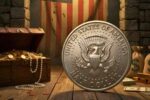
One of the most famous modern coin errors, this variety features the obverse of a Washington Quarter paired with the reverse of a Sacagawea Dollar. Estimated Value: $50,000 to $200,000. Identification Tip: Look for the mismatched designs; these coins are extremely rare.
4. 2007‑P Enhanced Finish Dollar
Special collector sets included coins with a unique satin finish. Estimated Value: $50 to $200. Identification Tip: Compare the surface texture with regular circulation coins.
5. 2009 Native American Dollar (Agriculture Reverse)
The first coin in the Native American $1 Coin Program featured a reverse design showing agriculture. Low mintage numbers make high‑grade examples valuable. Estimated Value: $100 to $500. Identification Tip: Look for sharp details in the reverse design.
6. 2010‑P Native American Dollar (Great Law of Peace Reverse)
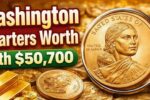
This coin honored the Iroquois Confederacy. Proof versions are especially prized. Estimated Value: $50 to $300. Identification Tip: Proof coins have mirror‑like surfaces and sharp details.
7. 2012‑S Proof Dollar
San Francisco proof issues are scarcer than circulation strikes. Estimated Value: $30 to $150. Identification Tip: Look for the “S” mint mark and proof finish.
8. 2014 Enhanced Uncirculated Dollar
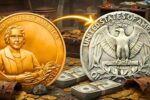
Issued in special sets, these coins have a unique finish combining matte and polished surfaces. Estimated Value: $100 to $400. Identification Tip: Enhanced uncirculated coins show contrasting textures.
9. 2015 Reverse Proof Dollar
Reverse proof coins feature frosted fields and polished devices, opposite of standard proofs. Estimated Value: $200 to $600. Identification Tip: Look for the distinctive reverse proof finish.
10. 2026 Collector Demand Varieties
As interest grows, certain earlier varieties and high‑grade coins are expected to rise in value at auctions. Estimated Value: $500 to $5,000 depending on rarity and condition. Identification Tip: Monitor auction results and grading service reports for trends.
Chart: Rare Sacagawea Dollar Error Coins and Their Values
| Sacagawea Dollar | Year | Variety/Error | Estimated Value Range |
|---|---|---|---|
| Cheerios Dollar | 2000 | Prototype Reverse | $5,000 – $25,000 |
| Goodacre Dollar | 2000 | Special Finish | $1,500 – $5,000 |
| Mule Error Dollar | 2000 | Quarter Obverse | $50,000 – $200,000 |
| Enhanced Finish Dollar | 2007 | Satin Finish | $50 – $200 |
| Native American Dollar | 2009 | Agriculture Reverse | $100 – $500 |
| Native American Dollar | 2010 | Great Law of Peace | $50 – $300 |
| Proof Dollar | 2012 | San Francisco Issue | $30 – $150 |
| Enhanced Uncirculated Dollar | 2014 | Special Finish | $100 – $400 |
| Reverse Proof Dollar | 2015 | Reverse Proof | $200 – $600 |
| Collector Demand Varieties | 2026 | Auction Trends | $500 – $5,000 |
How Collectors Identify Rare Sacagawea Dollars
Collectors often rely on magnifying glasses, reference books, and professional grading services to confirm authenticity. Key steps include:
- Checking mint marks carefully.
- Looking for unique finishes or doubled details.
- Comparing coins against verified images from trusted numismatic sources.
- Submitting rare finds to grading services like PCGS or NGC for certification.
Preserving the Value of Sacagawea Dollars
Condition is everything in coin collecting. Even rare varieties lose value if damaged. To preserve coins:
- Store them in protective holders.
- Avoid cleaning, which can reduce value.
- Keep them in a stable environment free from humidity.
Key Highlights
- The Sacagawea Dollar was introduced in 2000 and remains a popular collectible.
- Rare varieties include the Cheerios Dollar, Goodacre Presentation Dollar, and Mule Error Dollar.
- Values range from hundreds to hundreds of thousands of dollars.
- Proper identification and preservation are essential for maximizing worth.
Final Words
The Sacagawea Dollar is more than just a $1 coin; it is a symbol of American history and artistry. In 2026, collectors continue to uncover error coins that can bring big auction money. From the Cheerios Dollar to the legendary Mule Error, these coins remind us that treasures can be found in unexpected places. For collectors, the thrill lies not only in the value but also in the stories these coins tell, making the Sacagawea Dollar one of the most exciting areas of modern numismatics.