The world of coin collecting is more than just a hobby; it is a pursuit of history, rarity, and prestige. In 2026, elite collectors continue to chase after the most valuable U.S. coins, treasures that embody centuries of craftsmanship and scarcity. These coins are not only pieces of metal but symbols of American heritage, often commanding millions at auctions. Let’s explore the top ten coins that stand as the crown jewels of numismatics today.
1. 1933 Double Eagle
The 1933 Double Eagle remains the most famous coin in American history. Originally minted but never released due to the Gold Reserve Act, only a handful survived. One specimen sold for over $18 million, making it the most expensive U.S. coin ever auctioned.

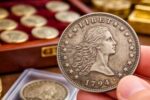
2. 1794 Flowing Hair Silver Dollar
Believed to be the first silver dollar struck by the U.S. Mint, the 1794 Flowing Hair Dollar is a cornerstone of American numismatics. Its rarity and historical significance push values beyond $10 million in private sales.
3. 1804 Draped Bust Dollar
Nicknamed the “King of American Coins,” the 1804 Draped Bust Dollar is legendary. Though dated 1804, most were struck decades later as diplomatic gifts. With fewer than 15 known, prices soar past $7 million.
4. 1913 Liberty Head Nickel
Only five examples of the 1913 Liberty Head Nickel exist, making it one of the most coveted coins. Its mysterious origins and rarity have driven auction prices above $4 million.
5. 1870-S Seated Liberty Dollar
The 1870-S Seated Liberty Dollar is a coin shrouded in mystery. With only one confirmed specimen, it is considered priceless. If ever sold, it could rival the Double Eagle in value.
6. 1861 Confederate Half Dollar
Struck during the Civil War, the Confederate Half Dollar is a rare relic of American history. Only four genuine examples exist, each valued in the millions due to its unique political context.
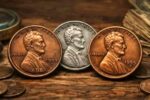
7. 1943 Copper Penny
During World War II, pennies were supposed to be made of steel. A few copper planchets were mistakenly struck, creating one of the most famous error coins. These pennies have sold for over $1 million.
8. 1822 Half Eagle ($5 Gold Coin)
Only three examples of the 1822 Half Eagle survive, making it one of the rarest gold coins in U.S. history. Auction values exceed $8 million when one surfaces.
9. 1856 Flying Eagle Cent
The 1856 Flying Eagle Cent was a pattern coin, struck in limited numbers to test designs. Collectors prize it as the beginning of small cent coinage, with values reaching hundreds of thousands.
10. 1873-CC No Arrows Dime
Minted in Carson City, Nevada, the 1873-CC No Arrows Dime is a legendary rarity. Only one is known to exist, making it a unique treasure valued in the millions.
Chart: Estimated Auction Values of Top Coins
| Coin | Year | Known Examples | Estimated Value (USD) |
|---|---|---|---|
| 1933 Double Eagle | 1933 | $18,000,000+ | |
| 1794 Flowing Hair Dollar | 1794 | ~150 | $10,000,000+ |
| 1804 Draped Bust Dollar | 1804 | 15 | $7,000,000+ |
| 1913 Liberty Head Nickel | 1913 | 5 | $4,000,000+ |
| 1870-S Seated Liberty Dollar | 1870 | 1 | Priceless |
| 1861 Confederate Half Dollar | 1861 | 4 | $2,000,000+ |
| 1943 Copper Penny | 1943 | ~20 | $1,000,000+ |
| 1822 Half Eagle | 1822 | 3 | $8,000,000+ |
| 1856 Flying Eagle Cent | 1856 | ~2,000 | $200,000+ |
| 1873-CC No Arrows Dime | 1873 | 1 | $3,000,000+ |
Key Highlights
- The 1933 Double Eagle remains the most valuable U.S. coin ever sold.
- Coins like the 1794 Flowing Hair Dollar and 1804 Draped Bust Dollar are prized for their historical significance.
- Error coins such as the 1943 Copper Penny prove that mistakes can become million-dollar treasures.
- Rarity is the ultimate driver of value, with several coins having fewer than five known examples.
- Collectors view these coins not just as investments but as pieces of American heritage.
Final Words
The top ten most valuable U.S. coins in 2026 remind us that history, rarity, and passion converge in numismatics. For elite collectors, these coins are more than currency; they are timeless artifacts that tell the story of America’s journey. Whether held in museums or private collections, they continue to inspire awe and admiration, proving that the smallest treasures often carry the greatest value.